
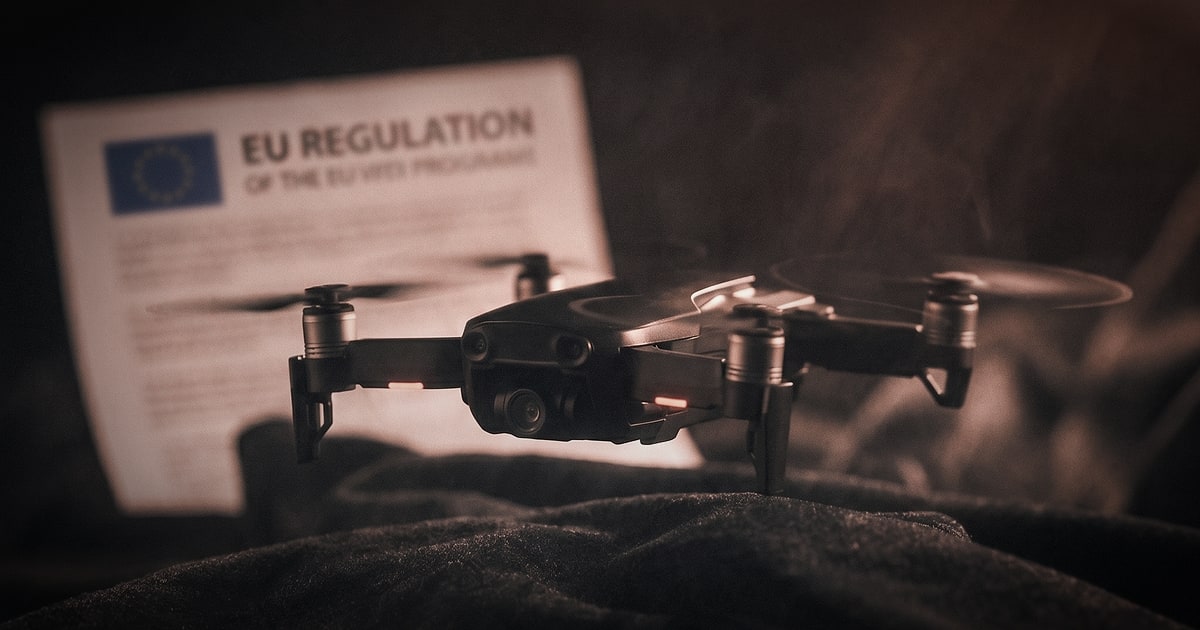
Why Drone Footage Transforms Content
Aerial perspectives add a dimension that ground-based cameras simply can't achieve. Whether it's a sweeping reveal of a property, a dynamic tracking shot of an event, or establishing shots that set the scene, drone footage elevates production value instantly.
EU Drone Regulations: What You Need to Know
The European Union Aviation Safety Agency (EASA) governs drone operations across Europe.
Operator Categories
- Open Category (A1/A2/A3) — For lighter drones under 25kg, lower risk operations
- Specific Category — For operations that require a risk assessment (most commercial work)
- Certified Category — For high-risk operations like flying over crowds
Key Requirements
- Pilot certification — Commercial operators must hold appropriate certifications
- Registration — All drones must be registered with the national aviation authority
- Insurance — Mandatory liability insurance for commercial operations
- Flight permissions — Specific zones may require advance authorization
- Visual line of sight — Standard operations require keeping the drone in view
Portugal-Specific Rules
In Portugal, the ANAC (Autoridade Nacional da Aviação Civil) oversees drone operations:
- Registration through the ANAC platform
- No-fly zones around airports, military installations, and certain urban areas
- Maximum altitude of 120 meters in most scenarios
- Special permits needed for urban commercial filming
Creative Techniques That Deliver Results
The Reveal Shot
Start close to a subject — a person, a building, a product — and pull back to reveal the wider context. This technique creates narrative tension and works brilliantly for brand films and real estate.
Top-Down Perspectives
Directly overhead shots create abstract, graphic compositions that feel fresh and modern. Perfect for architecture, events, and lifestyle content.
Tracking and Follow Shots
Following a subject from above adds cinematic energy. Whether it's a car driving through scenic roads or an athlete training, this technique brings dynamic movement to your story.
Hyperlapse
Combining drone movement with time-lapse photography creates stunning sequences that compress time and space. Ideal for construction progress, event setups, or cityscapes at golden hour.
Low-Altitude Proximity Flying
Not all drone footage needs to be high up. Flying at 2-5 meters above ground through environments creates an immersive, cinematic feel that's impossible to achieve by hand.
Planning Your Drone Shoot
Weather Considerations
- Wind speeds above 35 km/h ground most commercial drones
- Rain and fog severely limit operations and image quality
- Golden hour (sunrise/sunset) produces the most cinematic results
- Overcast days provide soft, even lighting ideal for real estate and architecture
Location Assessment
Before every shoot, a professional drone operator should:
- Check airspace restrictions and no-fly zones
- Assess potential obstacles (power lines, trees, buildings)
- Identify safe takeoff and landing zones
- Plan flight paths for optimal shot composition
- Have contingency plans for changing conditions
What to Expect from Professional Drone Services
A professional drone operator brings more than just a flying camera:
- Cinematic-grade footage — 4K or higher resolution with professional color profiles
- Legal compliance — all permits, insurance, and certifications handled
- Safety protocols — risk assessments and emergency procedures
- Creative direction — understanding of composition and storytelling
- Post-production — color grading, stabilization, and integration with ground footage